
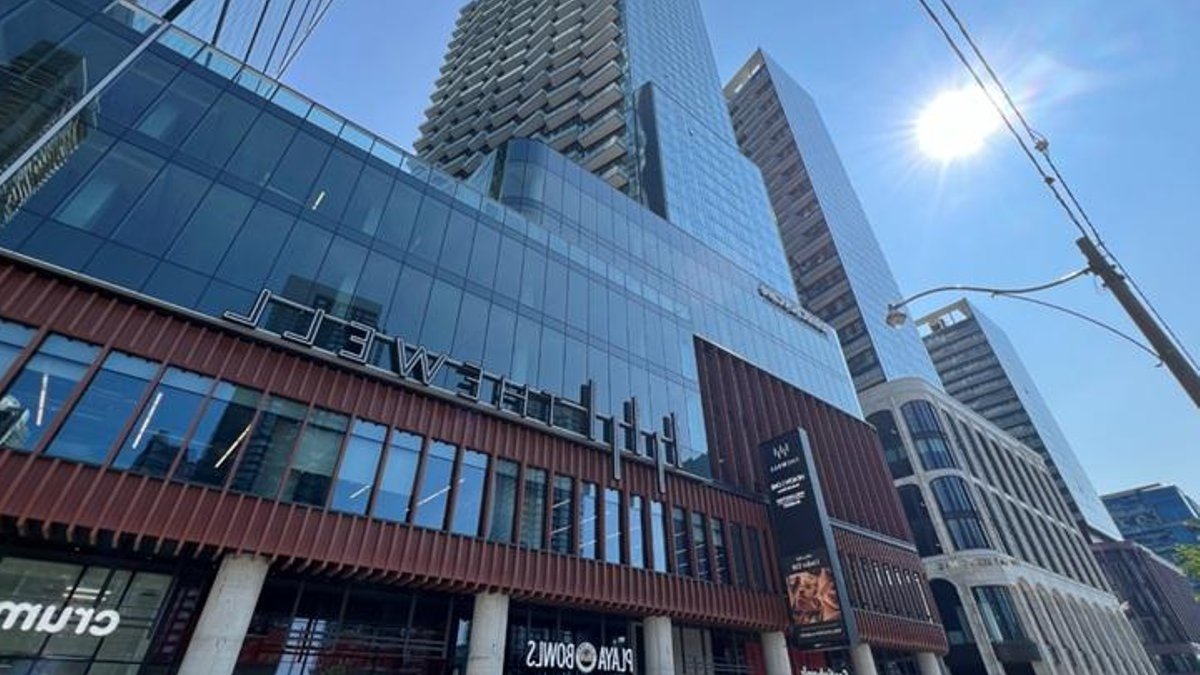
Commercial real estate investment in the Greater Toronto Area (GTA) rose by nearly 35 per cent year-over-year in the first half of 2026, reaching nearly $10.2 billion in transaction volume, according to Altus Group’s newly released Q2 2026 Toronto Commercial Real Estate Market Update.
The increase was driven in part by the sale of RioCan’s 50 per cent stake in the FourFifty The Well apartment building for $188 million, which helped boost apartment building transaction activity in the GTA to a 244 per cent year-on-year increase.
Altus Group senior research analyst Jennifer Nhieu, the report’s co-author, noted that well-capitalized investors are funnelling heavily into specific asset classes that offer income stability or long-term growth potential.
Institutional investors still largely remain on the sidelines, with private money driving the bulk of deals, according to Nhieu.
The largest transactions of the quarter included the sale of eight GTA senior housing properties for approximately $979.7 million and the acquisition of a 23-storey office tower for $198.13 million.
Transaction volume was broken down by sector.
Apartment Building Boom
The apartment building sector recorded nearly $2.4 billion in transaction volume, representing a 244 per cent year-over-year increase, driven by the widening home ownership affordability gap and low-cost financing options.
Office investment activity continued to improve, with the total-transacted-dollar volume rising by 125 per cent year-over-year to nearly $1.2 billion, driven by a flight to quality and high-end investments.
The industrial sector recorded nearly $3.6 billion in transaction volume, up 38 per cent year-over-year, despite a limited pipeline and high availability rates.
Total GTA retail investment volume declined by 30 per cent year-over-year to just over $925 million, reflecting limited product availability and high financing costs.
Nhieu noted that investors are looking past near-term supply deliveries to secure stable cash flow, backed up by a looming construction cliff that will likely choke future supply by 2027 and 2028.
The strength of activity in Durham and York Regions reflects genuine market momentum and continued investor confidence in the GTA’s suburban residential sector.
Office availability rates decreased by 200 basis points to 15.7 per cent year-over-year, with the downtown class-A availability rate within the Financial District at 9.6 per cent.
Nhieu described investor sentiment in the office sector as very cautiously optimistic, with a focus on high-end assets and return-to-work mandates.
Land transaction volume was also analyzed.
Land Transaction Trends
Industrial, commercial and institutional land transaction volume reached nearly $983 million, up 26 per cent year-over-year.
Residential land transaction volume dropped by 22 per cent to $1.1 billion, constrained by prolonged municipal entitlement timelines, high development charges, and compounding carrying costs.
Residential developers remained cautious, prioritizing site plan approvals and density optimization on existing land banks over acquisitions of unentitled sites.
Nhieu noted that there is little underlying momentum expected to bring up residential land activity in the near term.
She pointed out that investors are being selective.
It is a complex market.
The report provides detailed information.
Sector Growth Drivers
The increase in apartment building transactions can be attributed to the attractive financing options available, such as low-cost MLI Select financing, and tax relief like the GST and HST rental exemption, making multifamily an attractive avenue for investment in 2026.
The industrial sector’s growth can be attributed to the demand for modern, future-proofed facilities, with some developers continuing to advance speculative construction projects to capture the next wave of demand.
The retail sector’s decline can be attributed to the limited product availability, with owners retaining stabilized assets, as well as raised financing costs, which have reduced household disposable income and weighed on consumer confidence.
The regional retail market faced near-term headwinds from slower provincial population growth and softer consumer purchasing power, which has led to a decrease in retail investment volume.
The residential land transaction volume decline can be attributed to the prolonged municipal entitlement timelines, high development charges, and compounding carrying costs, which have made it challenging for residential developers to acquire new sites.
The cautious approach of residential developers has led to a focus on site plan approvals and density optimization on existing land banks, rather than acquiring new sites, which has contributed to the decline in residential land transaction volume.
The industrial, commercial, and institutional land transaction volume increase can be attributed to the demand for land in these sectors, driven by the need for modern facilities and the limited availability of existing properties.
Office Sector Resurgence
The office sector’s growth can be attributed to the flight to quality, with investors seeking high-end assets and return-to-work mandates driving demand for office space.
The downtown class-A availability rate within the Financial District being at 9.6 per cent indicates a strong demand for high-end office space, with limited availability of quality properties.
The report’s findings suggest that investors are taking a defensive yet opportunistic approach, focusing on specific asset classes that offer income stability or long-term growth potential, and being selective in their investments.


