
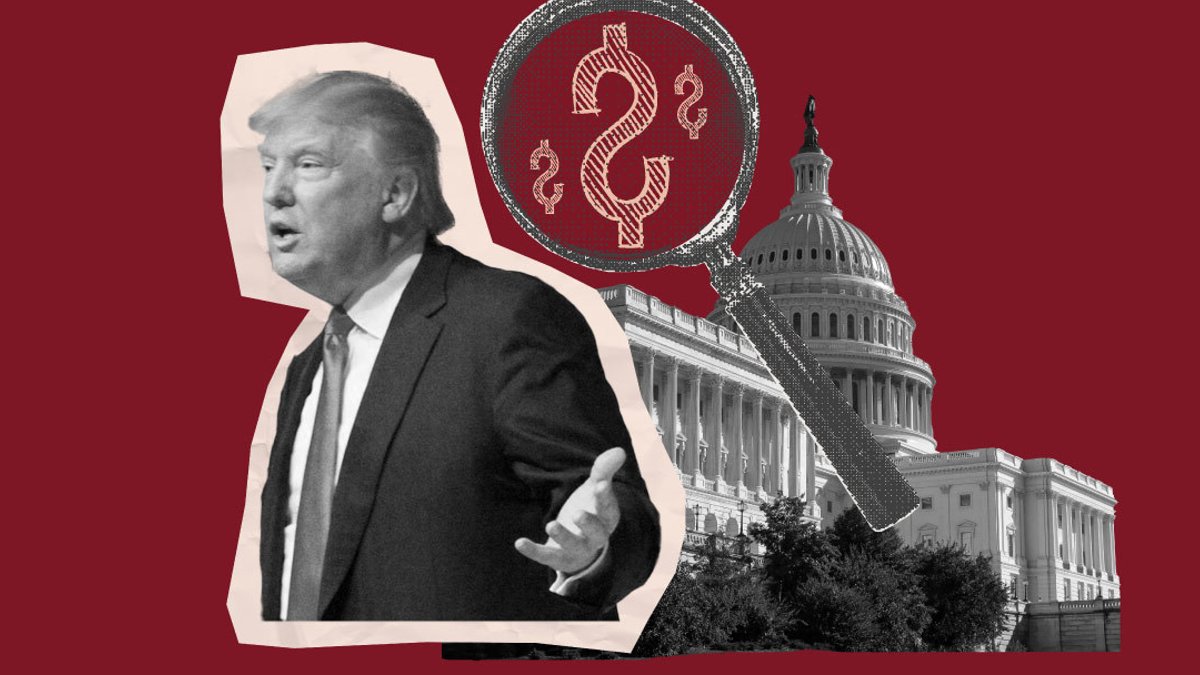
President Donald Trump signed an executive order on Thursday aimed at reducing housing costs, potentially saving some mortgage borrowers thousands of dollars.
The finalized version is more limited compared to a previous draft that was circulating in the past few weeks.
What’s in the order
The directive instructs Fannie Mae and Freddie Mac to establish a pilot initiative employing automated valuation models to determine present market worth and pinpoint borrowers who qualify for mortgage insurance cancellation, provided they satisfy equity and additional criteria.
A prior draft proposed extending the pilot to all mortgages acquired by the government-sponsored enterprises. Industry projections indicated this method could impact about 40% of borrowers with mark-to-market LTV ratios under 80% who might be eligible for mortgage insurance cancellation.
The version signed by Trump restricts the pilot to mortgages originated after the pilot program’s establishment, thereby markedly diminishing its scope for current borrowers.
The order further broadens a 2024 pilot utilizing alternatives to lender’s title policies in specific low-risk refinances with LTVs under 80% in certain regions. It envisions permitting use on loans exceeding 80% LTV, lifting geographic restrictions, and accrediting additional title assessment providers.
Fannie Mae has incorporated attorney opinion letters into its selling guide and initiated a title acceptance program that leverages internal data and analytics to forgo lender title insurance on qualifying loans.
Lenders have originated approximately 8,000 loans supported by AOLs and an additional 22,000 via title acceptance, with Fannie noting zero title defects.
Over the last 18 months, Fannie estimates these initiatives have saved borrowers approximately $25 million, equating to about $500 to $1,500 per loan.
Freddie Mac’s lender title assessment option permits originators to conduct title examinations and rectify defects without acquiring a conventional policy or an AOL.
Freddie noted that borrowers achieve an average saving of $600 to $650 per transaction, with savings spanning $400 to $1,700 based on state-specific rate structures. Initiated roughly a year prior, the program has facilitated just over $3 billion in volume.
The order signals continued interest in alternatives to traditional lender’s title policies, particularly for streamlined refinances.
How far these alternatives extend into higher-LTV loans and more markets will depend on how the Federal Housing Finance Agency implements the directive.
The order also targets refinance costs directly. It calls for waiving appraisals, income reverification, and other documentation requirements on certain limited cash-out refinances that reduce the borrower’s monthly payment. It also seeks to reduce or eliminate loan-level price adjustments and other fees on these loans.
Mixed reactions
American Land Title Association (ALTA) CEO Chris Morton said the focus on affordability is “critical” but warned that changes must maintain homeowner protections.
“Fraud is unaffordable, and the threats facing homeowners are growing,” Morton said.
KBW analysts expect the earnings impact on title insurers to be limited. Refinances account for around 7% of current title premiums, and that share will likely decrease by 2027 if interest rates stay high.
“The title insurance piece is real, but it’s aimed at the wrong part of the problem. Nobody refinances to save $800 on title. People refinance to lower payments, driven by rates, or to pull cash out,” Madiedo said.
Creighton Oswald, managing partner at Agility 360 Advisory, said the administration deserves credit for trying to break the production logjam. However, the EO focuses on housing finance mechanics while the main issues are rates and affordability.
Industry Reactions and Analysis
Seth Appleton, president of U.S. Mortgage Insurers, noted private mortgage insurance is designed to be temporary. He said the system already aligns with the order’s vision, as mortgage insurance cancellation reduces monthly payments.
Appleton supported recent GSE actions allowing servicers to proactively contact borrowers who may qualify for cancellation due to home price appreciation. He believes the pilot can test tools to accelerate cancellation while preserving mortgage insurance’s role.
Brendan McKay, chief advocacy officer at the Broker Action Coalition, highlighted potential savings from the order. He said reforms could cut refinancing costs by nearly $2,400 on a $500,000 loan, enabling more Americans to benefit from lower rates when available.
Mortgage Insurance and Refinance Cost Reforms
The executive order addresses mortgage insurance (MI) by proposing a pilot program to accelerate its cancellation for eligible borrowers. This initiative focuses on new loans, leveraging home price appreciation to determine equity thresholds. The Homeowners Protection Act of 1998 mandates automatic MI cancellation when the loan-to-value (LTV) ratio reaches 78% through scheduled payments. Borrowers may also request cancellation earlier based on appraisals if their LTV meets specific criteria tied to loan seasoning.


